







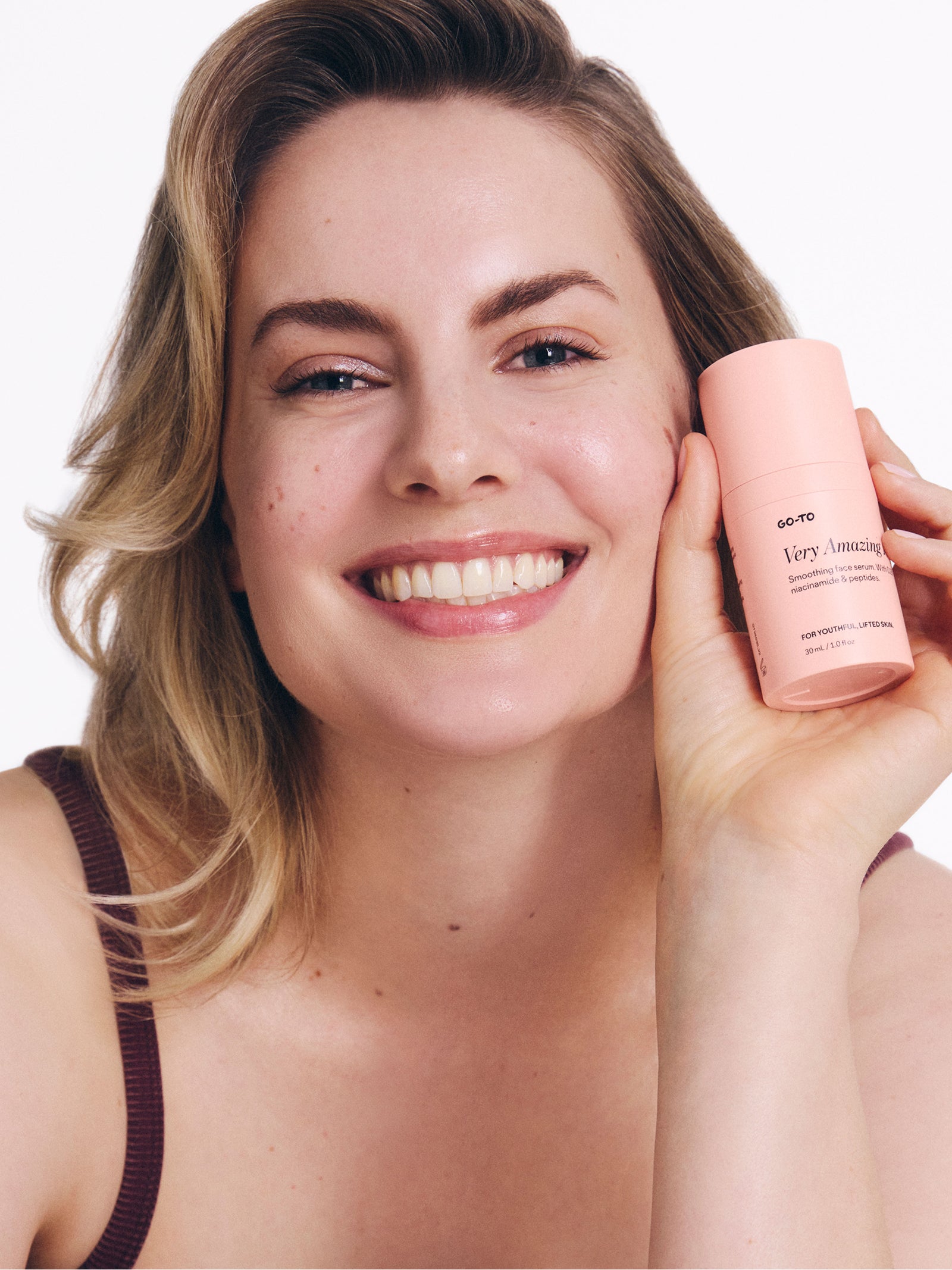






There is simply no excuse for skipping sun protection. Couldn’t find one you liked the feel of? Couldn’t find one that worked best with your skin type? You’re telling porkies.
SPF in general, has had a pretty great rebrand. The look and feel is nothing at all like the neon pink zinc stick that traumatised you in your childhood. Promise. Formulas, packaging, even product names are a lot more chic, less clinical and chemist-y, and there’s a lot more of ‘em.
(But they’ve still jumped through all the necessary hoops to ensure they help to protect your skin from damaging UVA and UVB rays. Australia has very strict sunscreen regulations. We’d know.)
Picking your protection has never been easier/harder. The options can be overwhelming.
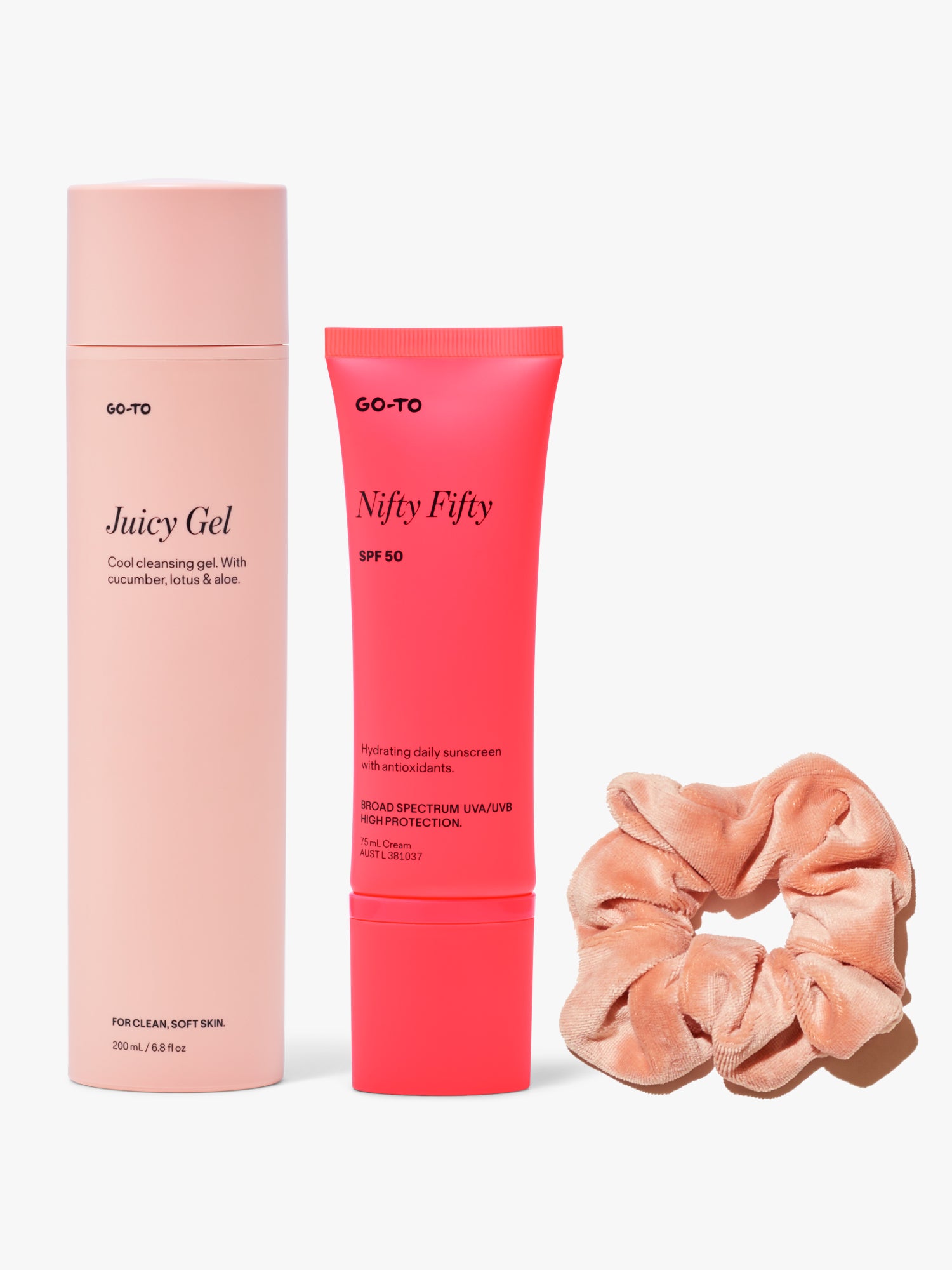
Go-To’s growing SPF family, for one, is designed to be flexible. To suit all skin types. But we totally acknowledge that some skin types (dry, sensitive, blemish-prone) benefit from a bit more direction to make sure they’re giving their skin what it needs.
Let us help. Your guide to hand-picking an SPF for your skin type is here.
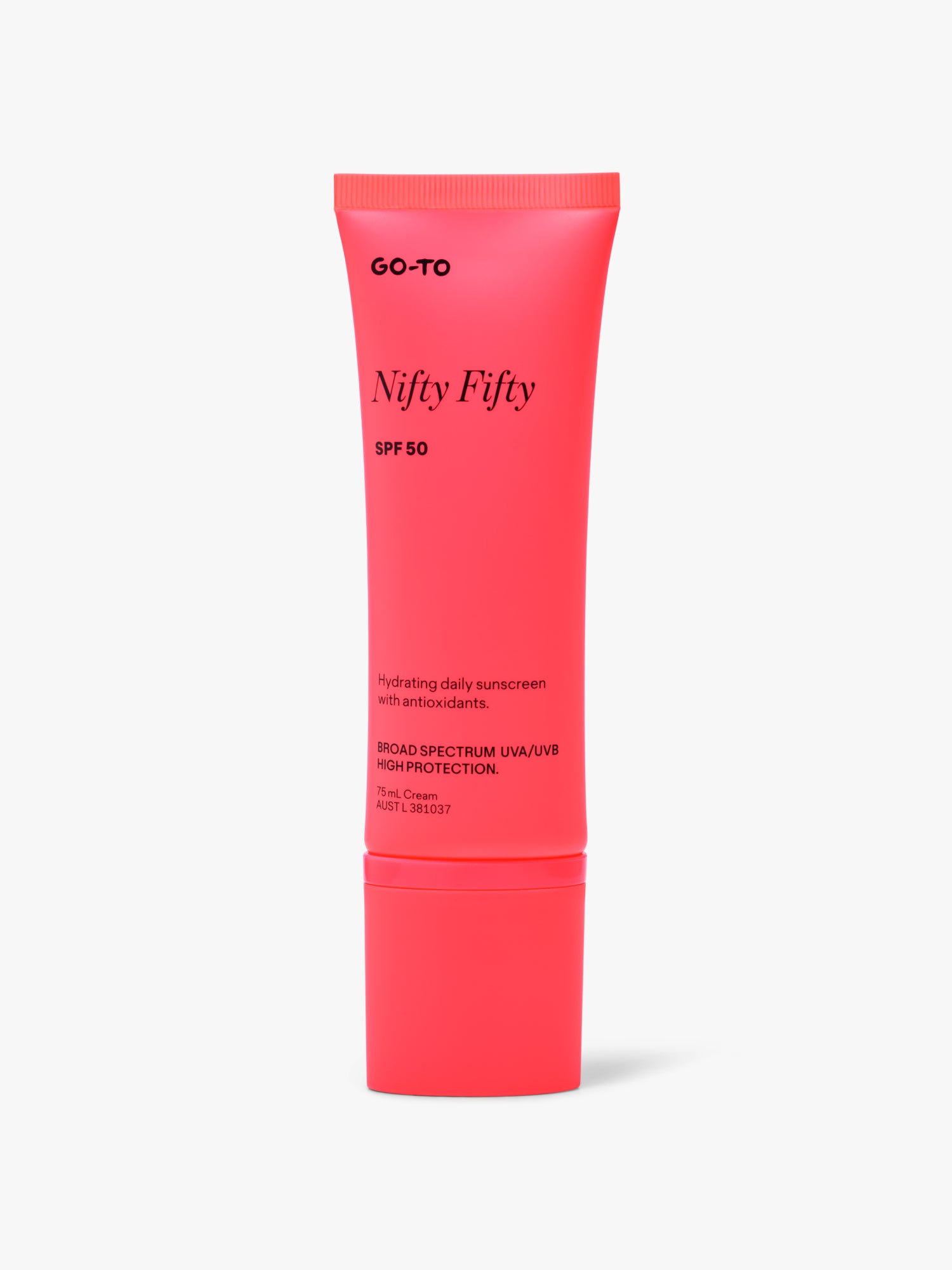


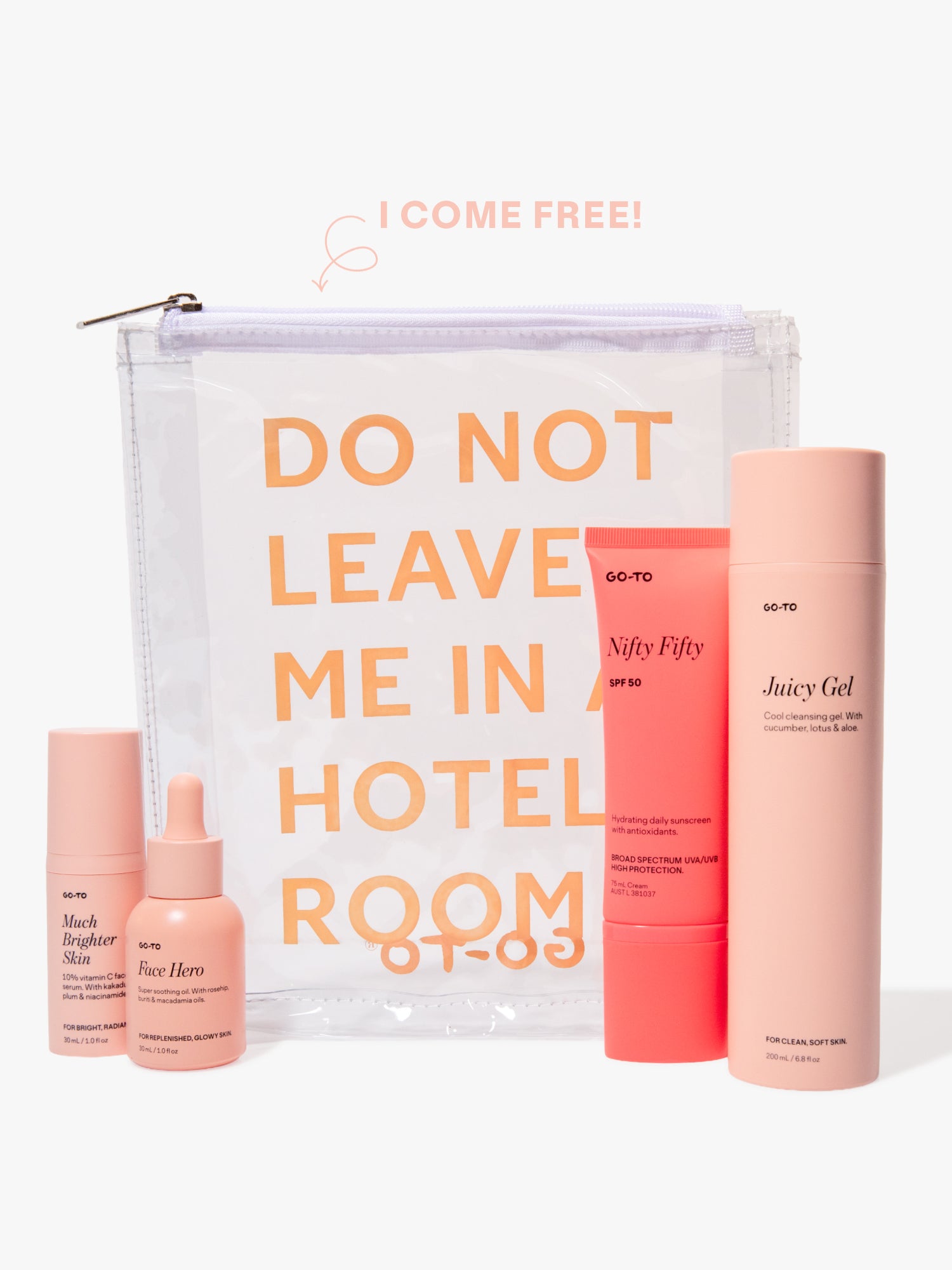



How To Find The Right Sunscreen For Your Skin Type?
We’re firmly in the camp that ‘the right’ sunscreen for your skin type is one you’ll actually wear everyday. Regardless of how oily your skin gets or not shockingly dry, the only rule we subscribe to is that whatever sunscreen you actually want to wear (and do) is always going to be ‘the right’ pick.
That being said, understanding your skin type is going to make finding said sunscreen much easier. Here’s a quick refresher: your skin type (unlike a skin concern) is the fundamental state of your skin, which rarely (if ever) changes. Skin concern, on the other hand, is a temporary skin issue you’re dealing with.
There’s five main skin types.
Dry skin: When your skin lacks oil (not water, that’s dehydrated skin which is a skin condition, not a skin type) and it is very common. Because your skin is slacking off with oil production, it also tends to feel rough and tight.
Oily skin: That’s when your skin produces too much oil. Usual side effects include excess shine, prone to blemishes and congestion, and generally features large, coarse pores.
Combination skin: That’s a bit of both. You’ll likely have both oily and dry spots on your face. Combo skin exists on a spectrum, so depending you might veer more oily or dry.
Sensitive skin: That’s any skin that’s prone to reactions: rashes, inflammation, and redness.
Ageing skin: Remember how I said sometimes your skin type changes? Well usually it’s the transition into the ageing skin camp with time. Ageing skin is characterised by losing its elasticity, showing more fine lines and wrinkles.
How To Choose The Right Sunscreen For Dry Skin
It’s easy to spot a good face cream for dry skin, right? You look for moisturising, hydrating ingredients. Well, it’s time to do the same thing with sunscreen.
Keep an eye out for formulas with ingredients that are going to draw moisture into the skin, hold it there, and prevent your skin from dehydrating throughout the day. Like:
-
Propanediol
-
Aloe vera
How To Choose The Right Sunscreen For Oily Skin
Faces who find themselves blotting away excess shine at 3pm, are often much bigger fans of chemical sunscreens because they tend to sink into the skin and absorb quite quickly.
If you’re oily and blemish-prone you might be more inclined to apply a mineral sunscreen. Look out for formulas that feature:
-
Zinc to help reduce the appearance of sebum and blemishes on the skin.
-
A matte finish to help balance any existing shine.
-
Lightweight-feel to avoid any yuck heaviness.
How To Choose The Right Sunscreen For Sensitive Skin
For sensitive skin, you often need to be more considerate and gentle with whatever you slather on your face. And will very quickly learn what works and what doesn’t. In the case of sunscreen that usually means:
-
Steering clear of fragrance entirely, and opting for a fragrance-free SPF.
-
Opting for zinc-based formula due to the ingredients incredible skin soothing properties.
-
Looking for formulas with calming ingredients like CoQ10.
How To Choose The Right Sunscreen For Ageing Skin
As our skin ages, it actually gets drier. Great news for anyone who is being overrun by their 3PM shine. Not great news for the general look and feel of your skin.
With this in mind, the best sunscreen for mature skin:
-
Hydrating and packed with replenishing ingredients that will help quench your thirsty face.
-
Dual-purpose skincare, loaded with antioxidants to help ward off the effects of environmental stressors and the dehydration, inflammation, and pigmentation they can cause. (Three things that only grow more common as we age.)
FAQs
Can sunscreen make oily skin worse?
Not if you’re using the right formula. Lightweight, non-comedogenic sunscreens with a matte or invisible finish are designed specifically to feel comfortable on oily skin without adding extra shine or congestion.
Is sunscreen enough moisturiser for dry skin?
Sometimes, but not always.
If you have dry skin, layering sunscreen over a moisturiser can help lock in that hydration and keep your skin feeling comfortable throughout the day.
Can sensitive skin wear chemical sunscreen?
Absolutely! Sensitive skin isn’t one-size-fits-all, and what works beautifully for one person might not for another. If your skin tends to react easily, patch testing new products and opting for fragrance-free formulas can be helpful.
Do I need to reapply sunscreen during the day?
Definitely. Sunscreen should be reapplied every two hours, especially if you’re outdoors, sweating, swimming, or spending long periods in direct sunlight.
Can I skip sunscreen if my makeup contains SPF?
Unfortunately, makeup with SPF usually isn’t enough on its own. We rarely apply enough to get proper protection. Think of SPF makeup as a bonus, not the main event.
What’s the difference between mineral and chemical sunscreen?
Both chemical and mineral sunscreens work by absorbing UV rays to help protect your skin. Mineral sunscreens also reflect a small percentage of UV rays too.
In terms of wear, mineral sunscreens are often preferred by sensitive or blemish-prone skin types, while chemical sunscreens are typically loved for their lightweight, invisible finish. Both are effective—it really comes down to personal preference and what you’ll happily wear every day.
Can oily skin skip moisturiser and just use sunscreen?
Sometimes, yes. Many sunscreens are formulated with hydrating ingredients, which means oily skin types may find their SPF provides enough moisture on its own—especially during the steamy summer months.
If your skin feels comfortable after applying sunscreen, there’s no hard-and-fast rule saying you must layer a separate moisturiser underneath. The only skincare rule we subscribe to is wearing sunscreen every day.
How much sunscreen should you apply to your face?
According to Cancer Council guidelines, adults should apply approximately one teaspoon of sunscreen to the face, ears, and neck combined. Often, we p aren’t using enough SPF, which means we’re not getting the full level of protection listed on the label.
Apply sunscreen generously 20 minutes before sun exposure and reapply every two hours, or more frequently after swimming, sweating, or towelling off.
Can you use body sunscreen on your face?
You could! Whatever works for you. But you might not always want to.
Body sunscreens are often formulated to be richer, heavier, or more water-resistant, which can feel greasy or uncomfortable on the face—particularly for oily, combination, or blemish-prone skin types. Facial sunscreens tend to be a tad more elegant, meaning they’re usually lighter in texture and sit more comfortably under makeup and skincare—with formulas designed for specific skin types.
Wear whichever formula you most enjoy the feel and finish of.
(Just as long as you’re wearing SPF. Every day.)

Comments